The Role of Crafts in Education: Developing Creative Skills in Children
Understanding the Value of Crafting in Education
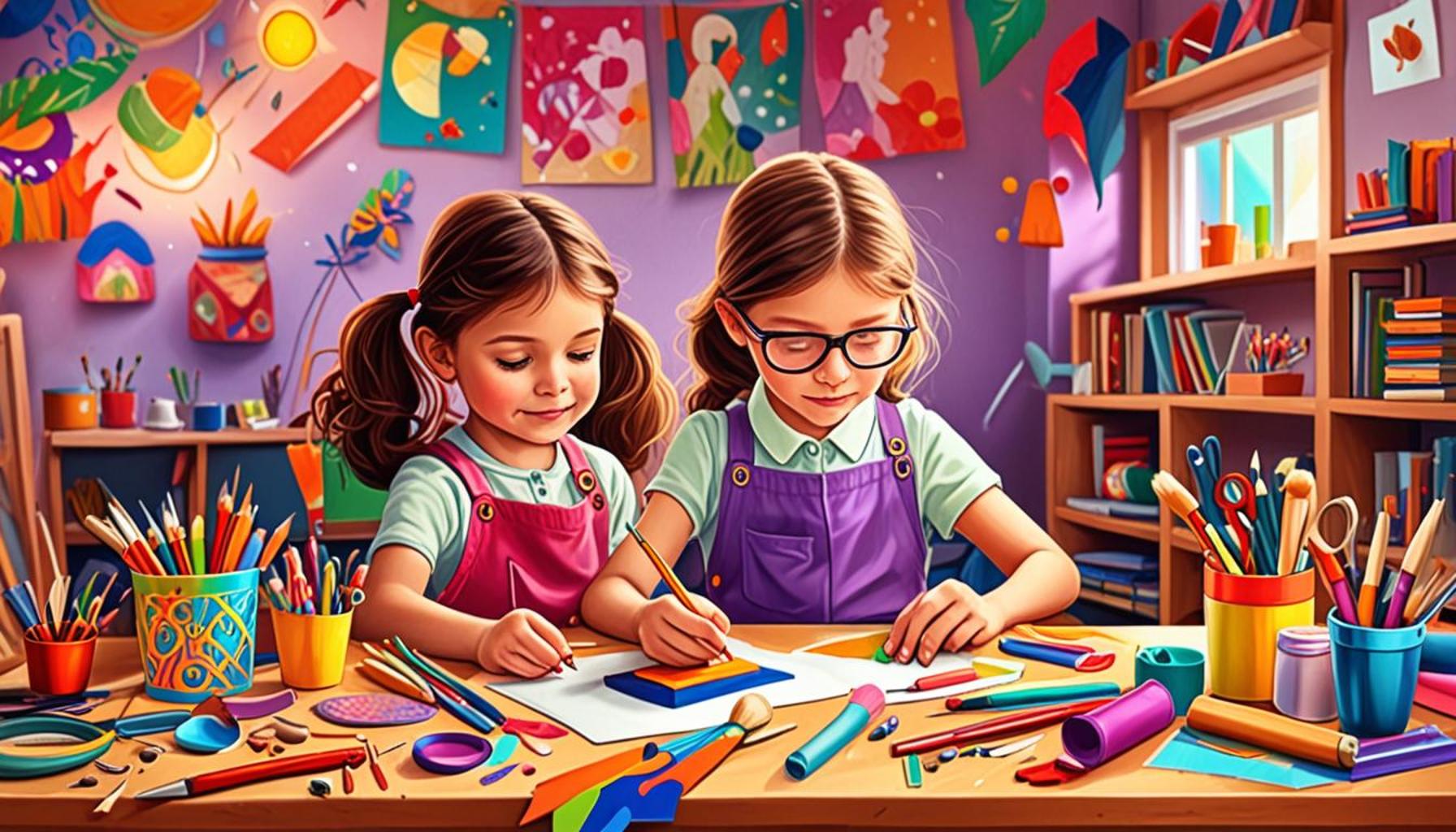
In an age where screens dominate much of our daily lives, we often overlook the profound impact that arts and crafts can have on children’s development. Engaging in crafting nurtures essential creative skills that not only inspire artistic expression but also foster critical competencies that are vital for their overall growth. Through hands-on activities, young minds are empowered to think outside the box and approach challenges with innovation.
The Benefits of Crafting for Young Learners
Participating in crafts has numerous developmental benefits, which can be pivotal in a child’s formative years. Here are a few key areas where crafting excels:
- Fine Motor Skills: Crafting activities enhance hand-eye coordination and dexterity by encouraging children to manipulate various materials. For instance, activities like cutting, gluing, and painting during projects help build the fine motor skills necessary for writing and other tasks.
- Critical Thinking: Children are given the opportunity to make decisions and troubleshoot their projects. Whether it’s figuring out how to construct a stable model from recycled materials or deciding on the color palette for a painting, each choice helps them develop analytical skills.
- Emotional Expression: Crafting provides a therapeutic outlet for children to express their feelings. When they create art, whether through abstract painting or crafting a diorama of their favorite place, they communicate emotions that they might not yet have the words to articulate.
Diverse Craft Activities to Explore
The true charm of crafting lies in its versatility, making it accessible and fun for children of all ages. It includes a variety of activities, such as:
- Painting and drawing, which allow for self-expression and exploration of color theory.
- Building models with clay or recycled materials, encouraging creativity and sustainability while honing spatial awareness.
- Creating handmade greeting cards or scrapbook pages, which not only develop artistic skills but also promote thoughtfulness and personal connections with others.
Each craft project can spark collaboration and creativity, especially when done in group settings. In classrooms across the United States, teachers are increasingly integrating creative arts into their curricula as a dynamic tool to engage students more deeply in their learning. Rather than isolating creativity from academic subjects, holistic approaches embrace craftsmanship as a means to instill joy and curiosity.
In a landscape that often prioritizes test scores and academic performance, it’s imperative to recognize that creativity is a cornerstone of developing innovative thinkers. By exploring innovative ways to implement crafts in educational settings, we open doors to new pathways that enhance engagement, understanding, and a passion for learning in children. Crafting, thus, is not merely a pastime but a powerful tool for growth and discovery that can transform the educational experience.
DIVE DEEPER: Click here to learn more
Crafting as a Gateway to Imagination and Innovation
The world of crafting opens up a realm of possibilities for children, functioning as an educational gateway to enhance their imaginative capacities. At a young age, children often thrive on exploration, and crafts serve as a canvas for experimentation. This engagement is not limited to artistic expression; it cultivates a myriad of skills foundational for future learning and problem-solving. By utilizing everyday materials, children learn to see the world through a creative lens, sparking their curiosity about how things work and how they can be transformed.
Nurturing Cognitive Development Through Crafting
Crafting plays a significant role in bolstering cognitive development in children. It encourages them to engage in exploratory talk and imaginative play, which are crucial for brain development. When children create, they employ various types of thinking—including divergent thinking, which is the ability to generate multiple solutions to a problem. For instance, a child tasked with designing a birdhouse from upcycled materials must consider functionality, aesthetics, and structural integrity, engaging higher-order thinking skills.
Moreover, through crafting, children are introduced to concepts of engineering and design in a practical way. Engaging with materials such as wood, paper, fabric, and clay allows them to understand basic principles of physics and mechanics. This hands-on experience lays the groundwork for future sciences and technology concepts, preparing them for a technologically driven society.
- Engagement in STEM Education: Crafts often intersect with science, technology, engineering, and mathematics (STEM) by encouraging experimentation and hands-on problem-solving. For example, constructing a rocket from simple materials can lead to discussions about aerodynamics or chemical reactions if using powered propulsion.
- Interdisciplinary Learning: Crafts provide opportunities to blend skills learned in various subjects. A project like creating a historical artifact for a social studies unit allows students to simultaneously explore art history and cultural narratives while engaging in physical craftsmanship.
- Boosting Confidence: Successfully completing a craft project instills a sense of achievement in children, enhancing their self-esteem. As they create, children learn that mistakes are a part of the learning process, which builds resilience and adaptability.
The implications of integrating crafting into educational frameworks extend beyond mere enjoyment. Numerous studies advocate for the importance of creativity in education, highlighting its role in developing critical thinkers equipped for tomorrow’s challenges. As educational institutions across the United States grapple with the integration of creative disciplines into standardized curricula, the conversation shifts to how best to utilize crafts as tools for learning. By honoring the role of crafting in the education system, we acknowledge its potential in shaping well-rounded individuals who can contribute meaningfully to society.
The integration of crafts into educational frameworks is not merely a supplement to traditional learning but serves as a crucial component in developing creative skills in children. Crafts encourage not only self-expression but also critical thinking, problem-solving, and effective communication. By engaging in craft activities, children learn to visualize a concept and bring it to fruition, which enhances their ability to think abstractly and critically evaluate their work. This transformative process lays a strong foundation for future academic and professional pursuits.
Moreover, crafting fosters fine motor skills and hand-eye coordination. As children manipulate different tools and materials, they gain a practical understanding of design and spatial awareness. This is especially evident in disciplines such as geometry and engineering, where understanding shapes and their properties becomes central to problem-solving. Furthermore, incorporating crafts into educational settings has been linked to improved emotional well-being. It provides a meditative outlet, aiding in stress relief and promoting resilience among students.
To enrich this discussion, let’s consider how integrating themes of cultural heritage and historical narratives within craft projects can provide context and deepen engagement. For example, when students engage in traditional crafts from various cultures, they not only learn artistic techniques but also gain insights into different worldviews and histories. This multicultural approach enhances empathy and social skills, preparing them for an increasingly globalized society.
The role of crafts in education extends beyond mere creativity; it shapes a holistic educational experience that nurtures well-rounded individuals capable of critical and empathetic thought. Exploring these layers of learning reveals the profound impact that hands-on activities like crafting can have on shaping young minds.
| Advantages | Description |
|---|---|
| Enhanced Creativity | Crafts stimulate imagination and encourage innovative thinking through hands-on activities. |
| Skill Development | Children acquire fine motor skills and critical thinking abilities, vital for their overall development. |
DIVE DEEPER: Click here to discover more about music and cultural expression
Crafting as a Means of Emotional and Social Development
Beyond cognitive skills, crafting plays a pivotal role in fostering emotional intelligence and social interaction among children. Participating in creative projects encourages children to express their feelings and thoughts in a tangible manner. Whether through painting, sculpting, or textile arts, crafting provides a medium where children can channel their emotions, which can lead to improved mental health and well-being.
Collaboration and Teamwork in Craft Activities
When engaged in group crafting activities, children learn the importance of teamwork. Projects that require collaboration—such as designing a mural or building a community project—encourage communication, negotiation, and conflict resolution skills. These experiences are vital as they help children to articulate their ideas and listen respectfully to the opinions of others. Studies have shown that children working together on art projects can improve their interpersonal relationships and develop a sense of belonging within a group.
- Empathy Development: As children share their creative processes, they can gain a better understanding of their peers’ perspectives. This sharing fosters empathy and nurtures emotional connections that are essential in a multicultural society.
- Celebrating Individuality: Crafts empower children to make personal choices and express their unique identities. By valuing diverse artistic expressions, educators can encourage inclusivity and respect for different backgrounds, enhancing cultural awareness in the classroom.
- Mindfulness through Crafting: Crafting can serve as a form of mindfulness practice. By focusing on a hands-on task, children can experience stress relief and concentration. This meditative aspect of crafting has shown positive effects on children’s mental health, promoting resilience in the face of academic pressures.
Research indicates that arts education—including crafts—can mitigate anxiety and promote positive emotional states in children. In classrooms across the United States, educators recognize that incorporating creative activities into daily routines can lead to more engaged learners. By allowing kids to explore their emotions in a constructive way, crafting nurtures their ability to cope with challenges and express themselves with confidence.
The Impact of Crafting on Lifelong Skills
The benefits of crafting extend well into adulthood, with many skills acquired in childhood translating to future professional and personal success. For instance, children who engage in crafts often develop a strong attention to detail and a commitment to quality. These traits are invaluable in various fields, from design and engineering to teaching and healthcare.
- Entrepreneurial Spirit: Many successful entrepreneurs attribute part of their creative thinking and innovation skills to early crafting experiences. The problem-solving nature of crafts fosters an entrepreneurial mindset; children learn to create solutions and think critically about how to bring ideas to fruition.
- Adaptability and Flexibility: Crafting requires children to adapt their plans when faced with unexpected challenges, preparing them for real-world scenarios where flexibility is crucial. This adaptability is particularly essential in today’s fast-paced and ever-changing job market.
- Sustaining Interest in Learning: Crafting ignites a love for learning and exploration, encouraging children to seek out new experiences. This passion for discovery cultivates a lifetime of curiosity, motivating them to continue learning throughout their lives.
By integrating crafting into educational contexts, educators are not merely teaching children how to create; they are equipping them with the necessary tools to navigate an increasingly complex world. As schools consider innovative approaches to early education, nurturing creativity through crafts must be prioritized to develop well-rounded, capable future leaders.
DISCOVER MORE: Click here to dive deeper into online communities
Conclusion: Embracing the Craft of Education
In conclusion, the role of crafts in education extends far beyond the creation of tangible objects; it is a profound pathway for developing creative skills in children. By integrating crafting into curriculums, educators unlock a myriad of developmental benefits that foster cognitive, emotional, and social growth. Through the act of creating, children learn to express emotions, work collaboratively, and appreciate the beauty of diverse perspectives.
The intricate relationship between crafting and personal development cannot be overstated. As children engage in projects that require teamwork and problem-solving, they cultivate essential skills such as empathy, adaptability, and a continuous appetite for learning. These foundational qualities are critical in shaping not only well-rounded individuals but also future leaders who are equipped to navigate a rapidly changing world. Moreover, the meditative nature of crafts promotes mindfulness, offering students a refuge from academic pressures while enhancing their overall mental well-being.
As the landscape of education continues to evolve, prioritizing crafts stands as a powerful and necessary approach to learning. Educators, parents, and policymakers must advocate for artistic expression in schools, ensuring that all children have access to experiences that foster creativity and innovation. Embracing the role of crafts in education may very well lay the foundation for a generation that not only thinks critically but also acts compassionately—qualities that are indispensable in our increasingly interconnected global community. Thus, the journey of crafting is one that leads to enriching lives, igniting curiosity, and paving the way for a brighter future.