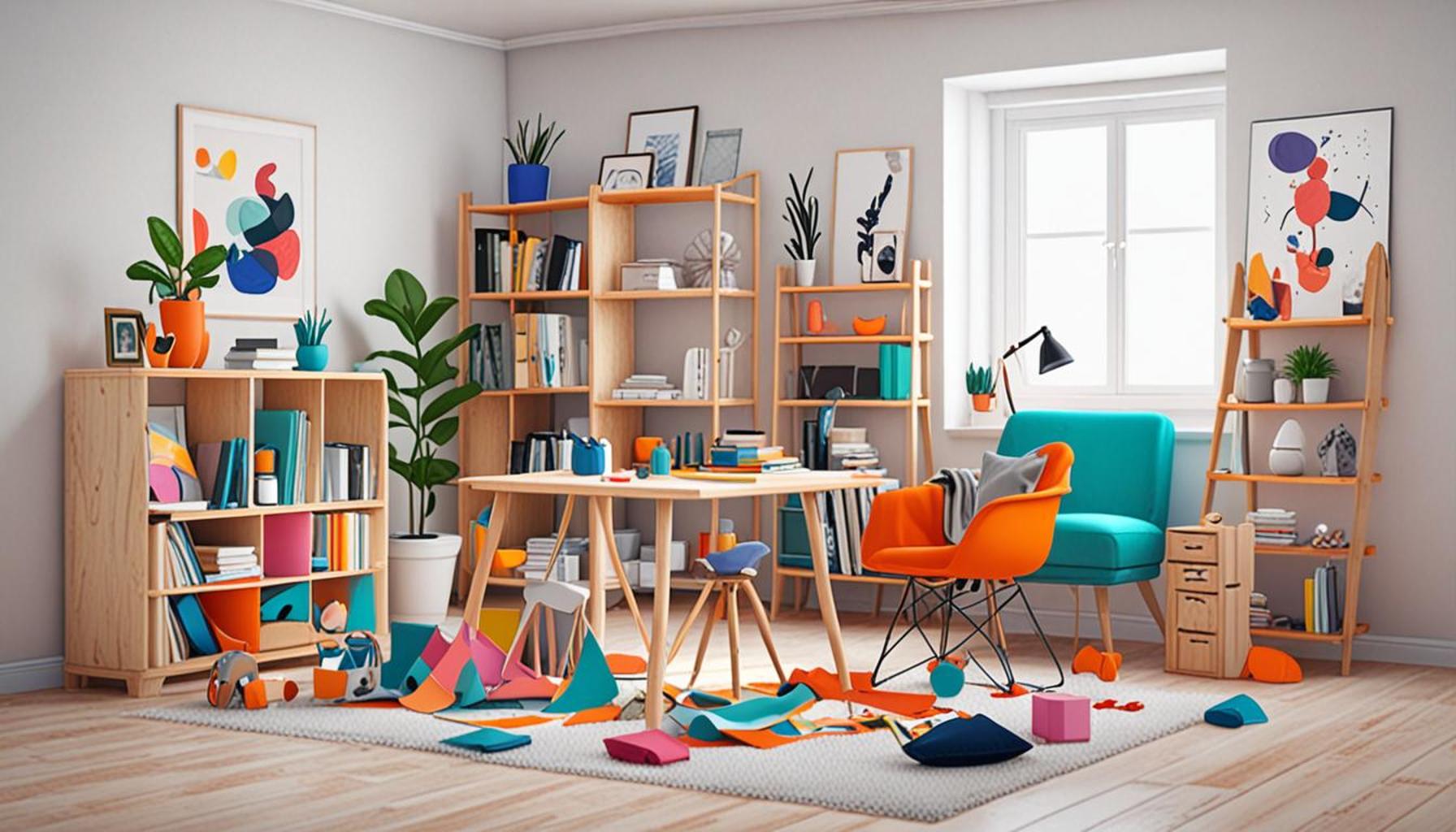
The Influence of Clutter Reduction on Creativity: Making Space for New Ideas

Understanding the Impact of Clutter on Creativity
In today’s fast-paced society, many individuals find themselves navigating a landscape filled with endless distractions. From constant notifications to the pressure of balancing multiple responsibilities, maintaining focus has become increasingly challenging. Interestingly, the physical spaces we inhabit could significantly influence our ability to think creatively and productively. Recent studies have spotlighted clutter reduction as a pivotal factor in enhancing cognitive functions, suggesting that reducing chaos in our environments opens up avenues for innovative thinking.
To appreciate the benefits of a decluttered space, one must first observe the link between organization and focus. A 2021 study published in the *Journal of Environmental Psychology* revealed that individuals working in tidy environments were 30% more likely to concentrate on their tasks than those surrounded by mess. Less clutter translates to fewer distractions, allowing individuals to immerse themselves in their work fully. This heightened focus can lead to deeper comprehension and more profound insights.
- Improved Focus: When working in a clean space, distractions are minimized, allowing creativity to thrive. For instance, a writer may find that sitting at a neatly organized desk, free of unnecessary papers, allows them to brainstorm and write more fluidly.
- Enhanced Mental Clarity: A clean environment can promote clearer thinking, facilitating better decision-making. For example, entrepreneurs who engage in creative problem-solving often find that an organized workspace helps clarify their vision and objectives.
- Increased Motivation: An orderly space not only inspires action but also enthusiasm for tasks at hand. Artists, for instance, might feel invigorated to paint or create in a studio that reflects their creative ethos through organization.
Several creative professionals have echoed these sentiments. Well-known figures like Steve Jobs emphasized the importance of a minimalistic workspace, asserting that it fosters creativity. The workspace can influence our emotional responses and drive. When decluttering, one often feels a surge of fresh energy, leading to increased productivity.
Diving deeper into the psychological effects of clutter reduction, it becomes apparent that its implications extend beyond mere productivity. An organized space can lead to:
- Less Stress: Disorganization often heightens anxiety levels, as clutter in one’s environment is visually overwhelming. A neat space helps to create an atmosphere of calm, enabling one to focus on the tasks at hand.
- Better Mood: The aesthetics of an organized environment can significantly influence emotional wellbeing, thus fostering a positive outlook. Spaces adorned with natural light and greenery, for instance, have been linked to an uplifted mood among residents.
- Heightened Creativity: Less visual noise allows the mind to roam freely, facilitating creative connections and solutions. Many artists and designers report that their best ideas often surface in organized spaces, free from distraction.
As we examine the intricate relationship between clutter and creativity, it becomes evident that simple, intentional changes in our surroundings can lead to groundbreaking innovations. In fact, embracing simplicity and organization might just hold the key to unlocking untapped creative capacities. By fostering environments that prioritize clarity and order, we pave the way for new ideas to flourish and truly transform our approaches to problem-solving and creativity.
DIVE DEEPER: Click here for minimalist strategies that can transform your daily routine
The Psychological Benefits of a Tidy Workspace
As we delve deeper into the relationship between clutter reduction and creativity, understanding the psychological benefits of a tidy workspace is essential. Clutter often symbolizes chaos and distraction—elements that can hinder not just productivity but also creative potential. When a space is disorganized, it can evoke feelings of overwhelm and anxiety, triggering mental fatigue that stifles the flow of fresh ideas. Thus, embracing simplicity becomes more than a matter of aesthetics; it is a necessity for fostering cognitive ingenuity.
One significant advantage of maintaining an organized environment is its profound impact on mental clarity. A clear workspace promotes sharper focus and encourages individuals to approach problems with a refreshed perspective. Research has revealed that people who work in well-organized spaces report improved cognitive performance. A study from the *Personality and Social Psychology Bulletin* indicated that individuals who declutter their environments experience a reduction in cognitive load, allowing them to tackle complex challenges without distraction. For example, tech companies have begun prioritizing open and collaborative workspaces, which not only reduce clutter but foster innovative thinking processes.
- Encouragement of Innovative Thinking: When distraction is minimized, the mind can wander freely, allowing connections to form in unexpected ways. Creative thinkers, like authors and designers, may find that working in a clean, organized area enables them to explore various possibilities.
- Enhanced Efficiency: An orderly workspace results in quicker access to essential materials, which can streamline workflows. For instance, a graphic designer with clearly labeled files and resources can spend less time searching for inspiration and more time creating.
- Motivational Boost: Decluttering often creates a sense of accomplishment—a motivator that propels individuals to engage with their tasks. Art studios that maintain a structured layout can invite creativity as artists feel encouraged to create in environments that reflect their organized thoughts.
Moreover, it is crucial to understand how clutter affects emotional wellbeing. Disorganized spaces can contribute to feelings of frustration and helplessness. A survey conducted by the National Association of Professional Organizers found that over 80% of participants indicated clutter negatively impacted their moods. Nationally, more individuals are realizing that a simple decluttering session can significantly change their emotional landscape. It can engender a sense of control and calm—a vital foundation for nurturing creative thought.
The power of emotional positivity cannot be overstated. An organized environment often exudes a sense of harmony that encourages a better overall mood. Spaces saturated with natural light, clean lines, and minimalistic decor have been linked to a more enthusiastic engagement with one’s work. This is particularly relevant in the current landscape where working from home becomes commonplace, altering personal and professional dynamics. Prioritizing an organized home office setup can enhance one’s creative output significantly.
As we explore the vast implications of clutter reduction on creativity, it becomes evident that intentional organization transforms environments, which in turn can inspire groundbreaking ideas and innovative solutions. Investing effort into decluttering is not merely an act of cleaning but an investment in fostering the creative mind to thrive, shaping the future of problem-solving in both personal and professional realms.
The Influence of Clutter Reduction on Creativity: Making Space for New Ideas
As we delve deeper into the relationship between clutter and creativity, it’s essential to recognize how physical environments impact our mental processes. Research suggests that a cluttered space can lead to feelings of overwhelm and distraction, which may stifle our ability to generate new ideas. In contrast, a more organized setting promotes clarity and focus, allowing for more effective creative thought. When we simplify our surroundings, we, in essence, create a canvas for innovation. This is particularly evident in creative industries such as design and writing, where the ability to think outside the box is crucial. A study from the University of Minnesota highlights that individuals who work in neat environments tend to produce more original ideas compared to those in chaotic spaces. This indicates that eliminating distractions is not merely a matter of preference, but a significant factor in enhancing one’s creative output.Moreover, the emotional aspects tied to clutter cannot be overlooked. Clutter often carries emotional weight, reminding us of unfinished tasks or unresolved feelings. By actively reducing clutter, we can also release these emotional burdens, thereby creating mental space for fresh ideas to flourish. In practical terms, adopting habits such as regular tidy-ups, prioritizing essential items, and fostering minimalist principles can contribute significantly toward cultivating a space that encourages creativity.To further accentuate the benefits of decluttering, consider adopting practices from mindfulness to enhance both physical and mental clarity. Engaging in mindfulness exercises, such as meditation or focused breathing, can amplify the positive effects of a decluttered environment, leading to increased creativity and problem-solving abilities. This transformative journey of making space ultimately opens doorways to unforeseen possibilities, igniting the spark of innovation that resides within us all.In light of the profound impact that clutter has on our thinking processes, it stands to reason that making conscious efforts to reduce physical disarray can yield substantial dividends in our creative endeavors. The next step is practical implementation: how can we effectively clear our spaces to foster an environment ripe for new ideas? This leads us to explore tools and strategies that align with our goals, promoting an atmosphere that not only tolerates but embraces creativity as a fundamental component of everyday life.
| Advantages | Impact on Creativity |
|---|---|
| Enhanced Focus | Clutter-free environments eliminate distractions, allowing for deeper concentration and idea generation. |
| Emotional Clarity | Reduction of emotional clutter fosters a sense of peace, enabling freer flow of creative thoughts. |
DISCOVER: Click here to enhance your workspace efficiency
The Role of Environment in Creative Thought
Continuing our exploration of the direct connection between clutter reduction and creativity, it is essential to consider how the overall environment influences creative thought processes. The surroundings in which an individual works can significantly impact their ability to ideate and innovate. Studies suggest that a carefully curated environment can serve as a canvas for creative engagement, while a cluttered space can be a barrier that stifles inspiration.
Lighting, color, and spatial layout are key factors that contribute to enhancing creativity. For instance, a study published in the *Journal of Environmental Psychology* found that exposure to natural light can boost creativity by up to 20%. Offices that allow ample daylight not only create a pleasant atmosphere but also impact the brain’s capacity to generate new ideas. This phenomenon can explain why so many companies are investing in windows, skylights, and open spaces that invite the outdoors inside.
- Color Psychology: The colors present in a work environment can evoke specific emotions, influencing creativity. Warm colors, such as yellows and reds, have been linked to increased energy and enthusiasm, while cooler colors like blues and greens promote calmness and focus. The choice of color can either invite creativity or discourage it depending on the atmosphere one wishes to cultivate.
- Spatial Arrangement: The physical configuration of a workspace can foster collaboration and idea sharing. For instance, companies such as Google and Facebook utilize open office layouts paired with breakout areas. These designs encourage networking and brainstorming sessions that thrive in clutter-free environments, leading to the generation of innovative concepts.
- Personal Touch: On an individual level, incorporating personal belongings that inspire or motivate can enhance creativity. Many creatives keep sentimentally valuable items on their desks. These elements create a sense of connection and personal investment in the workspace, signaling the importance of emotional wellbeing in the creative process.
In addition to the physical aspects of a workspace, attention should be paid to the concept of mindfulness in relation to clutter reduction. Mindful practices, such as decluttering rituals, can enhance one’s creative capacity. The act of intentionally clearing a space not only removes physical distractions but also establishes a mental state conducive to creativity. Research indicates that engaging in mindfulness activities can boost cognitive flexibility, a key component of innovative thinking. This connection is particularly pertinent as more individuals are recognizing the value of integrating mindfulness into their daily routines.
The impact of a clutter-free workspace extends to social interactions as well. In creative fields, collaboration is often a catalyst for new ideas. An organized and inviting environment encourages openness and idea exchange, leading to collective creativity. Incubators and coworking spaces have become popular for this very reason, allowing like-minded individuals to thrive in environments designed for creativity and innovation. The shared experience of working in a well-structured space can also create a sense of community among creative thinkers, fostering motivation and inspiration.
Finally, as we interpret the intricate dynamics between clutter reduction and creativity, it becomes increasingly clear that the transition toward minimalism should be embraced. The deliberate act of curating one’s environment is more than a personal preference; it is a strategic choice aimed at unlocking potential and enabling creative brilliance. From individual practices to collaborative environments, the implications of organized spaces resonate across all fields, illustrating the profound influence of decluttering on fostering innovation and creative thought.
DISCOVER MORE: Click here to learn about the art of letting go
Conclusion: Embracing Clutter Reduction for Enhanced Creativity
In our examination of the influence of clutter reduction on creativity, it becomes evident that an organized and intentional environment is a powerful catalyst for innovative thought. The interaction between our physical surroundings and mental processes highlights how decluttering can liberate creative potential, making space for fresh ideas and inspiration. By minimizing distractions, we do not merely create a cleaner space; we pave the way for heightened focus and imaginative flow.
From the benefits of natural light to the psychological impact of color and the fostering of collaboration, it is clear that thoughtful environmental design is paramount in nurturing creativity. As we have seen, mindful practices such as decluttering rituals can enhance cognitive flexibility, further supporting the notion that a clear mind begins with a clean workspace. This holistic approach extends beyond individual preferences, demonstrating how community spaces designed for collaboration can amplify creativity collectively.
Ultimately, the journey toward a clutter-free environment is not just about aesthetics; it is a strategic investment in our creative future. As individuals and organizations embrace minimalism, they also embrace the radical potential for innovation. Thus, it is vital for anyone seeking to enhance their creative capabilities to recognize the profound impact of their surroundings. By consciously cultivating spaces—both personal and shared—that reflect intention and clarity, we allow creativity to flourish, leading to groundbreaking ideas and transformative experiences.
As we move forward in an increasingly complex world, let us continue to explore how we can maximize our creative opportunities through the art of decluttering. After all, making space for new ideas begins with the simple choice of clearing away the old.