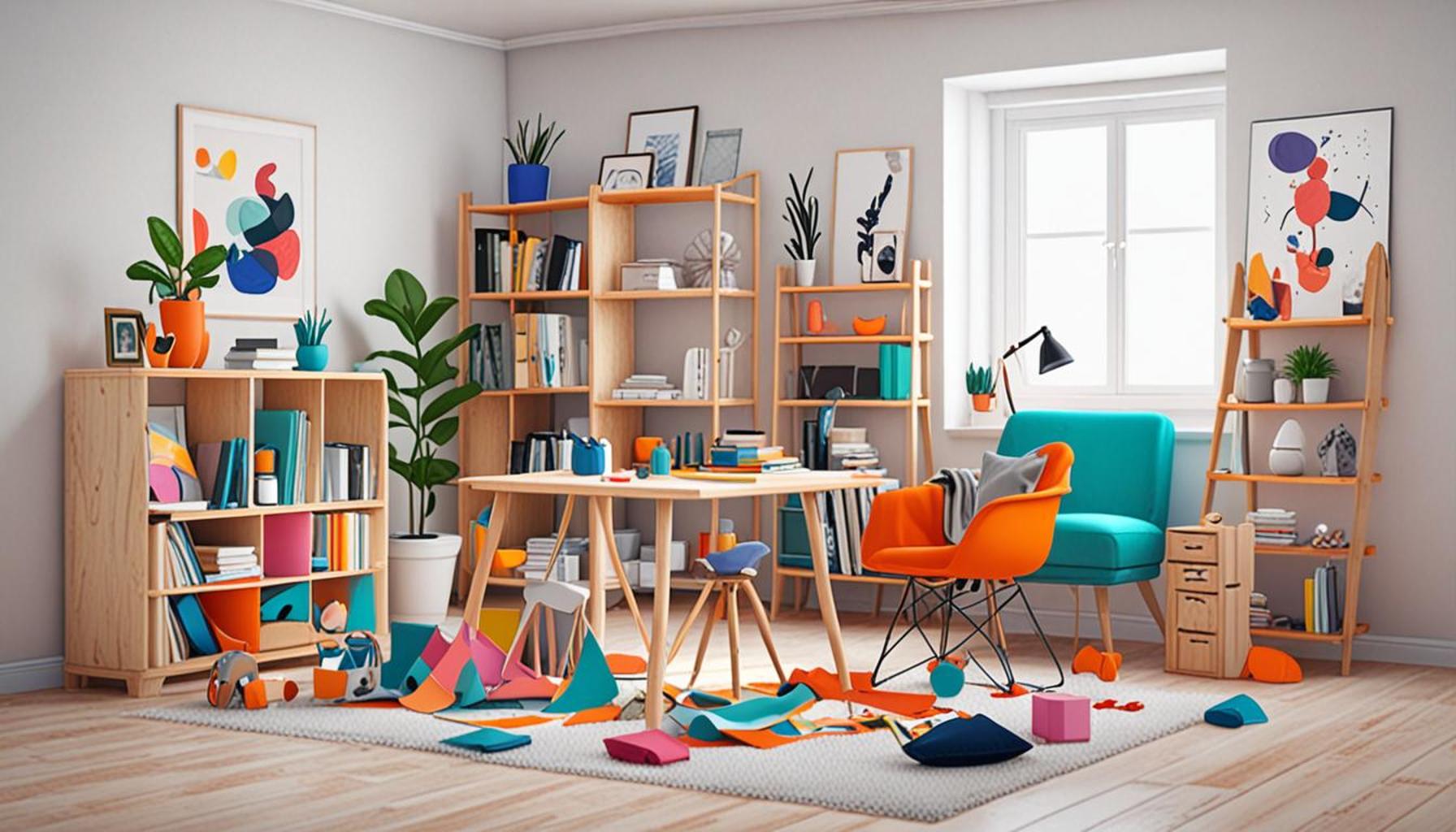
The Emotional Impact of Decluttering: How Organization Can Improve Your Well-Being

The Emotional Impact of Decluttering
In today’s fast-paced world, many individuals find themselves overwhelmed by chaos in their living and working spaces. The act of decluttering extends beyond simple aesthetics; it can profoundly influence emotional well-being and overall life satisfaction. As we navigate our daily routines, a well-organized environment can lead to several noteworthy benefits.
- Reduced Stress Levels: Clutter can act as a constant source of stress, contributing to feelings of anxiety and overwhelm. For instance, a study published in the journal “Personality and Social Psychology Bulletin” indicated that individuals surrounded by clutter experienced higher cortisol levels, a hormone associated with stress. By removing excess items and organizing the remaining possessions, people often report a significant reduction in their anxiety levels as the visual noise of clutter fades away.
- Enhanced Focus: A tidy space fosters better concentration and productivity, creating an environment conducive to focused work. Research from the Princeton University Neuroscience Institute suggests that clutter can limit our ability to focus, as our brains struggle to prioritize multiple stimuli. A well-arranged workstation helps individuals maintain attention on tasks at hand, ultimately allowing for more effective work and quicker completion of projects.
- Improved Mood: A clean environment can elevate one’s mood and encourage a sense of satisfaction. Decluttering often brings about a sense of accomplishment, as individuals can visually appreciate the results of their efforts. This improvement in mood may also arise from the psychological relief of letting go of items that no longer serve a purpose, promoting feelings of freedom and clarity.
Research indicates a strong connection between our surroundings and our mental state. In fact, studies show that individuals who engage in regular decluttering tend to report:
- Greater Clarity of Thought: A simplified space often leads to a clearer mind. When we eliminate distractions, our cognitive processes become more streamlined, allowing for more strategic thinking. This clarity can be particularly beneficial when tackling complex problems or making important decisions.
- Increased Motivation: An organized space often motivates people to tackle other tasks. The act of decluttering can create a ripple effect, empowering individuals to take on additional projects such as home improvements, fitness goals, or personal development initiatives.
- Enhanced Creativity: A clutter-free environment can stimulate innovative thinking. When the mind is clear of distractions, it allows for greater creativity to flourish. Artists, writers, and designers often find that a clean workspace helps ignite their imagination and fosters new ideas.
The implications of these findings are significant. When we proactively manage our spaces, we are not just organizing physical objects; we are cultivating a healthier mental state. Embracing minimalism, for example, has become a trend in the United States, with books like “The Life-Changing Magic of Tidying Up” by Marie Kondo encouraging a systematic approach to decluttering that aligns with these psychological benefits.
Ultimately, taking control of our environments can pave the way for a happier, healthier life. As we simplify our surroundings, we may discover that we are also simplifying our thoughts and emotions, leading to a more fulfilling existence. This article delves into the emotional benefits of decluttering and emphasizes the importance of creating spaces that support our mental well-being.
DISCOVER MORE: Click here for essential tips on home decluttering

The Psychological Benefits of a Clutter-Free Life
As we dive deeper into the emotional impact of decluttering, it’s essential to recognize how our environment physically manifests and affects our psychology. Clutter does more than just obstruct physical pathways; it clutters our minds and emotional states as well. Research suggests that an organized living space can catalyze substantial transformations not only in our immediate surroundings but also in our mental health and emotional well-being.
The tactile and visible changes that accompany decluttering create a sense of order that can foster psychological resilience. For many, clearing out an overstuffed closet or desk is not just about finding more space; it’s about reclaiming control over one’s environment. According to a study from UCLA, women who described their homes as cluttered were more likely to feel fatigued, and this fatigue often seeped into their daily activities. In contrast, those who maintained a calmer environment reported a higher degree of satisfaction with their lives.
The Cycle of Decluttering and Emotional Release
Many individuals describe the process of decluttering as therapeutic. As they sift through their belongings, they often encounter old memories and emotions tied to items they no longer wish to keep. This practice can be cathartic, providing an avenue for emotional release. As one lets go of material possessions, it often parallels the letting go of obsolete emotions or experiences, clearing the way for renewal and revitalization.
- Emotional Clarity: Letting go of possessions requires introspection, fostering a clearer understanding of personal values and priorities. This focus often leads to greater self-awareness, enhancing the ability to make decisions aligned with one’s current life goals.
- Sense of Accomplishment: Completing a decluttering session can yield an immediate sense of achievement. This psychological boost is vital in fostering a positive self-image and stimulating further personal growth beyond the realm of organization.
- Improved Relationships: On occasion, excessive clutter can strain interpersonal relationships, especially if the shared spaces become contentious battle zones. Embracing a decluttering mindset can not only lead to a more harmonious home but also promote healthier interactions among housemates and family.
The act of decluttering then becomes a meaningful practice that extends beyond organization; it opens a doorway to renewal and transformation. Studies have shown that environments reflective of order and minimalism often promote a sense of stability during turbulent times. As we wrestle with emotional challenges, comprising daily stressors and global uncertainties, a tidy space can serve as a restorative sanctuary.
Furthermore, adopting mindful decluttering practices can lead to long-lasting change. Techniques modeled after popular decluttering philosophies advocate for asking oneself critical questions about why each item is kept, which invariably deepens personal insight. In this way, the benefits of decluttering not only provide immediate relief but also encourage long-term emotional health.
As we continue exploring the emotional side of organization, it becomes evident that decluttering is more than a mere chore; it’s a pathway to a better understanding of ourselves and our emotional landscapes. The empowerment derived from this process leads us one step closer to a fulfilling, organized life.
| Emotional Benefits | Impact on Well-Being |
|---|---|
| Reduced Anxiety | A clutter-free space fosters a sense of calm and reduces feelings of being overwhelmed. |
| Boosted Creativity | A tidy environment can lead to improved focus, enhancing your ability to think creatively. |
| Increased Productivity | Organizing your surroundings allows for greater clarity, which significantly boosts your efficiency in tasks. |
| Improved Mood | Decluttering can create feelings of accomplishment and positivity, leading to a happier mindset. |
The emotional impact of decluttering extends beyond just creating a clean space. Each benefit, carefully linked to psychological health, shows how organization can dramatically shift your well-being. For instance, many find that with a clear workspace, they experience a significant reduction in anxiety, as the absence of clutter translates to mental clarity. Additionally, many studies highlight that a clean environment actively boosts creativity, allowing individuals to engage fully in their tasks with less distraction. Boosting productivity is yet another key factor; organized spaces enhance focus, enabling you to accomplish more with less stress. Furthermore, the act of decluttering often brings a surprising, yet uplifting, improvement in mood. Each time you let go of unnecessary items, you can feel a sense of achievement which naturally contributes to your overall happiness. By understanding these connections, individuals can embrace decluttering not merely as a task but as a transformative journey toward improved emotional health.
DISCOVER MORE: Click here to learn about the impact of minimalism on productivity
Transforming Mindsets Through Minimalism
In recent years, the concept of minimalism has garnered significant attention, often extending beyond aesthetics to encompass profound emotional and psychological shifts. Minimalism advocates for a lifestyle characterized by intentionality, encouraging individuals to embrace only those possessions that add value to their lives. This philosophical approach is intrinsically linked to the emotional impact of decluttering, pushing us toward deeper reflection and creating opportunities for enhanced well-being.
What minimalism teaches us is the power of selection and intentionality. Many who adopt a minimalist mindset report feeling liberated from the demands of consumerism and the overwhelming nature of material attachments. A study conducted by the University of Southern California highlighted that individuals who identified as minimalists often experienced lower levels of anxiety and depression, suggesting that letting go of excess items can directly correlate with improved mental health.
The Role of Environment in Emotional Health
Our physical environment is a direct reflection of our mental state. Consider the idea of a cluttered workspace—studies reveal that disorganization can impede productivity and creativity, further exacerbating feelings of stress and frustration. Conversely, a clean and organized workspace promotes a sense of calm and encourages focus, ultimately enhancing our capacity to tackle challenges effectively. The American Psychological Association reports that environments that foster organization can create a positive feedback loop, enabling individuals to address tasks with motivation and efficiency, directly linked to an improved emotional framework.
- Enhanced Productivity: An uncluttered environment has shown to improve concentrations and overall productivity. Individuals who engage in regular decluttering find they can complete tasks more efficiently, reducing stress levels associated with looming deadlines.
- Emotional Resilience: By creating a space that reflects peace and order, individuals often find it easier to navigate life’s challenges. The serene nature of a tidy space acts as a buffer against negative emotions, promoting a greater sense of emotional stability.
- Mindfulness and Presence: Decluttering encourages a practice of mindfulness—being present in one’s environment. This awareness can lead to deeper appreciation for one’s surroundings and the cultivation of gratitude, steering focus away from feelings of scarcity.
Moreover, the ritual of decluttering can serve as a form of self-expression and authenticity, allowing individuals to curate their possessions to align with their personal identity. This process enables a refreshing embrace of who they are and the life they aspire to lead. In tandem, maintaining an organized space is often a reminder of personal growth, showcasing how one has evolved over time. This visual representation of progress can bolster self-esteem and serve as a motivational anchor for future goals.
The psychological implications of decluttering extend beyond individual benefits. Communities that advocate for shared spaces often emphasize organization as a means to promote collective well-being. Organized shared environments in communal living situations foster collaboration, enhance relationships, and cultivate a sense of belonging among individuals. As such, decluttering can inspire not only personal growth but also contribute to a more harmonious community.
As we explore these transformative impacts, it becomes increasingly clear that the emotional benefits of decluttering are profound and far-reaching, highlighting a fundamental aspect of human psychology: our surroundings play an integral role in shaping our emotional well-being.
DISCOVER MORE: Click here to uncover essential strategies
Conclusion: Embracing the Benefits of a Decluttered Life
In summary, the emotional impact of decluttering is undeniable, revealing a profound connection between our environment and mental well-being. By intentionally curating our surroundings, we can create spaces that not only promote order but also foster emotional resilience, mindfulness, and productivity. The shift towards minimalism is more than just a trend—it is a powerful approach that invites individuals to reflect on their values and priorities and make conscious choices that align with their deepest aspirations.
Research has demonstrated the cascading benefits of maintaining an organized space, such as reduced anxiety and improved focus. With each item we choose to keep or discard, we engage in a process that cultivates clarity, allowing us to navigate life’s challenges with greater ease and effectiveness. Furthermore, fostering organized environments can have a ripple effect, enhancing not only our personal lives but also contributing to a sense of community and connection with those around us.
As we contemplate the psychological implications of our physical spaces, it becomes clear that investing time in decluttering can be a transformative journey towards enhanced well-being. For those looking to take the first step, consider starting small—perhaps by tackling a single drawer or a designated corner of your home. As the benefits unfold, you’ll likely find motivation to continue this rewarding practice. In the end, a life marked by intentionality and clarity can pave the way for profound emotional growth, inviting peace, joy, and fulfillment into our daily experiences.